Bianca Bosker's Cork Dork
Lots of parallels between wine and coffee...
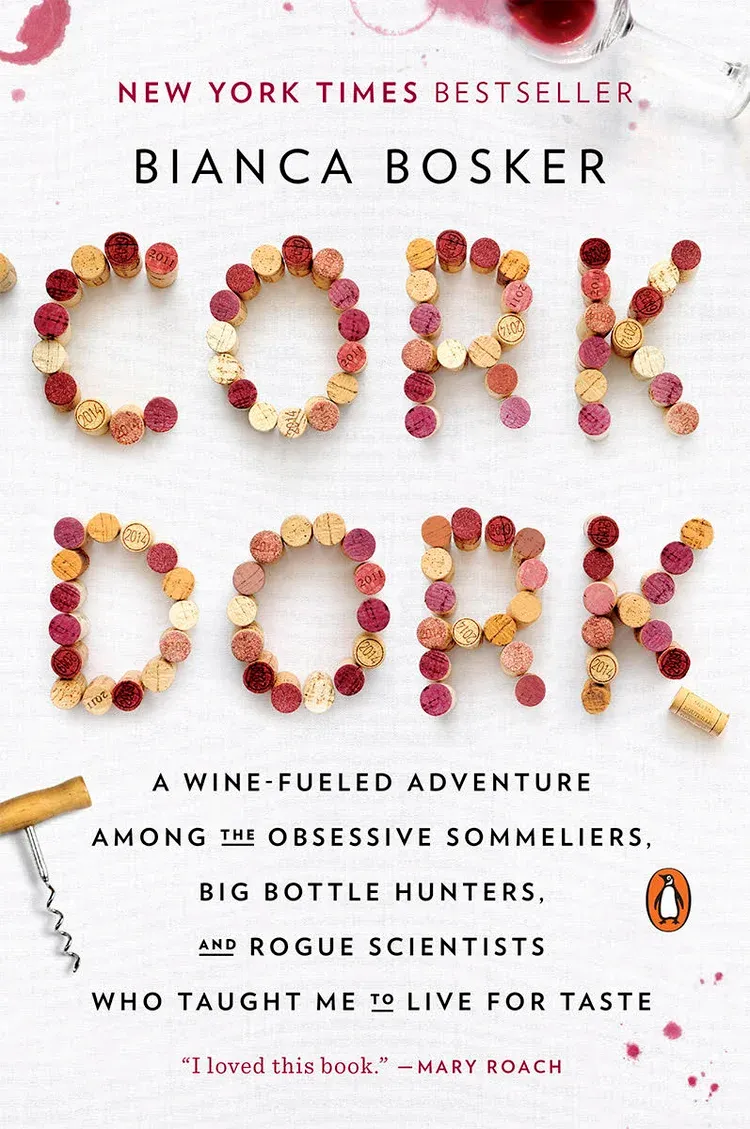
2 weeks after moving to France, I finally began reading Bianca Bosker's Cork Dork. It was THAT wildly popular on NLB, I had to wait for it. Also, can we count France as a wine country? It is right? I mean 12 wine regions hello? There are only have 13 regions in Metropolitan France!
Oh yeah, it is. The Old World wine country.
Personally, I'm not into wines. Other than - you know - religious reasons, wine itself has always felt somewhat... exclusionary? Even after having 2 years of working experience in a French organisation and managing god-knows-how-many wine tasting workshops, it still feels that way. Knowing the product doesn't take away that feeling, apparently.
Anyway, I read Bosker's other book, Get The Picture, while I was still in Singapore, which led me to reading Cork Dork. I like the way she immerses herself into industries to write about them. For this book, her goal was to get inside the world of wines through sommeliers and even challenged herself to eventually take the Court of Master Sommeliers test. From the sounds of it, I think it's pretty similar to Specialty Coffee Association's Q Grader programme.
At the core of it, Cork Dork is an adventure story about learning to pay radical attention. While it is clearly a book about wine, it's basically a book about how we taste, why we taste, and what happens to our lives when we decide to taste "better". For someone who is currently touching the surface of specialty coffee, I found that parts of it can be applied to coffee too.
Bosker begun by pointing out one of the book’s central themes:
“We obsess over finding or making food and drink that tastes better … yet we do nothing to teach ourselves to be better tasters.”
As someone who has spent a biiiit of time sniffing single origin coffee beans (whole and ground), experimenting with V60 pour-over ratios, and saving cafés in my "places to visit in (city name)" lists, I could relate but was also...offended? It's easy to say that medium roasts are better than darker roasts, but to explain the "why" is HARD.
“I sniffed. It smelled, I hated to say it, like wine.”
Honestly, this was me when I was in those wine tasting workshops. They all smelled like alcohol to me. And also me, before I sat on the bullet train towards specialty coffee. Coffee is coffee, no? What different flavours was I supposed to taste?
I remember the first day of work at Tiong Hoe and my ex-manager (who was also one of the roasters) was cupping a few different beans he was testing. And I learned that you had to SLURP coffee from a tasting spoon (a more circular spoon than a regular tea spoon). And the sound was mentioned in the book:
“I ttthhhuuuupppped again” —
I did it. I actually did it. I sniffed the coffees after "breaking the crust", I slurped the coffee like it's a soup, and I was able to name some of the flavours presented in the coffee. Thanks to my wine "training".
These days, I still slurp my espressos.
Also realised that Le Nez kit for coffee was developed AFTER Le Nez Kit for wine.
“What I needed was a conceptual structure … so that I could classify and comprehend the aromas I smelled.”
It was quite nice when she mentioned Le Nez (literally: the nose). It also reminded me of the first time I encountered the SCA Coffee Taster’s Flavour Wheel at Bettr Academy. I wasn't just tasting roasted coffee beans, I was able to put words to the flavours I was experiencing. The wheel helped to expand my vocabulary in coffee-tasting. I wished I could get Le Nez Kit for coffee, because it does not only put words to flavours, but also has scent concentrates so you can put the two together.
Also, from the previous book where she talks about how people buy or get into certain types of art because it reflects on them as people, she spoke about how:
“In describing wines, we like talking about our ideal selves.”
I feel like as a coffee person, I sometimes do this too, especially to others who are not necessarily "in the know". While I try to be direct and less poetic about describing coffees, to most people I know: coffee is coffee. It's dark. They put sugar and milk in their coffee. It's fine!!!! (As I heave and puff my chest screaming nooooooo don't ruin my V60)
However, I’ve seen people online describe some coffee beans as “sunshine in the rain,” and I was like GOD please stop this pretentiousness. The flavour wheel is pretentious enough!!! RELAX!!
Bosker talks about Pierre Bourdieu’s notion that we "admire the things that make us admirable". Taste then becomes a way to signal our status in society: the right bottle, the right processing method, the right producer. Something about how we present ourselves and all that. The brands we know, how we know them, WHO we know.
It reminded me of the time I had to secure sponsorships for bottles of Taittinger for a work event. In wine, like in coffee, your network matters! And not just the label. Someone "up there" with the right French connections got the lead instantly, and I felt a little outcasted by my lack of industry insider contacts and lack of knowledge about these things.
Bosker talked about La Paulée in the USA, where owners of Burgundy wines come together to show off their collections/goods/whatever else. Apparently Burgundy region is very highly appreciated? Anyway,
“(Paulée-goers) appreciated the wine because it was their conduit into a lifestyle that made them feel special.”
That line succinctly described how people drink certain types of wines not because they necessarily appreciated the taste, but the message they get to communicate to others because of the wine they drank.
But the central question of all this tasting and drinking is:
What makes a wine... good?
As she explored what makes wine good, the following made me think about how I assess a coffee's "goodness":
“Price does correspond with quality, but only up to a point.”
“Could it be that the definition of ‘good’ wine is entirely subjective?”
And the most obscenely pretentious opinion of all (not from her):
“Wine can be good even if the drinker doesn't like it.”
What the actual f....
The parallels to coffee are there. I love a Gesha because I find the flavour to be dynamic and it's also a forgiving bean. It's a kind and gentle lover, that doesn't scream at you when you make mistakes. She'll just taste a bit weird. But does it make Gesha a good coffee? To me, yes! But it may not be for you!
Now, Bosker's discussion regarding balance, complexity, and finish as professional benchmarks of wine-tasting sound like how cuppers score coffees. But obviously our life experiences, where we come from, our culture, the food we eat, can cloud our perception of said coffee. I mean, are these grading numbers even accurate? God knows.
Also, maybe it's just our obsession with numbers, data, information, that makes us feel like things aren't real or correct when there isn't a number to it.
We want data on our fitness, our lovers, our hedonism.
This reminded me of those reels where people present their Spotify-Wrapped-style dating history in the year. It brought me back to when I was doing my degree in psychology: everything can be quantified! (Or can they? Hmmm.)
One of the sommeliers Bosker had worked with, Morgan Harris, slapped this reminder when asked about what makes wine good:
“Thank God there's still something … that belongs completely to the process and the mysterious and the aesthetic.”
Like, okay, sure, get all science-y and measure-y but at the end of the day, aren't these just things we drink for pleasure and enjoyment? Why do we need to score them? Why can't we just accept that everyone has different tastes and needs and will react accordingly?
Also, I think one of my favourite parts of the book is how Bosker got neuroscience involved in this. I think training your tongue and nose to recognise a scent probably requires a lot of brain power and I was right.
“Trained tasters summon the more critical, analytical, and higher-order parts of our brains… In cultivating these senses … we engage the part of us that elevates our reactions and makes us human.”
And this part consolidated all this jazz for me:
“Training does change us, even more quickly and profoundly than we realise.”
Because it's true. I know people who can identify which country a single origin bean comes from just from slurping a spoonful of a drip coffee. Why? Because they take time to brew, taste, and sniff whenever there is a new bean on the shelf. I wished I had that kind of power. I probably needed to train myself a bit more.
Also, for the Court of Master Sommelier exam, part of the practical bit is service. Bosker mentioned after attempting the test that:
We were all training ourselves to maintain a set of standards that were, for the most part, utterly unrealistic in today's dining rooms.
Gosh. I remember managing a wine tasting workshop, and a guest was pissed that the assistant sommelier served the ladies around the room first and then the men. He remarked that we were "not in a restaurant!" And I get it, he just wanted his wine! But those standards... are they not the ones that differentiate the Michelin-starred restaurants from your everyday ones? Perhaps, but also consider that Michelin stars are also given out to food trucks these days so maybe Bosker is right.
I was also reminded about service and hospitality, the two things that most cafés strive to get right:
“Hospitality is present when something happens for you. It is absent when something happens to you.”
Oh, in the beginning of the book, Bosker explained that the senses of smell and taste were considered indulgent and became pariah senses for the longest time. But taste and scent are such important senses and not just because they are related to indulging in gluttony! Some stuff, like being able to smell a gas leak, can be life-saving. Also there was bizarre study showing women’s tears lowering male arousal. I mean, good, I guess? Why would you be aroused by a woman crying? You weirdo.
Anyway, Émile Peynaud said
“The taster also needs to have a particular reason for tasting if he is to do so effectively.”
It effectively concludes the whole 'being a better taster' that Bosker mentioned earlier. Tasting isn’t passive. It requires purpose, structure, and most importantly, humility.
And it can, as the book shows, be transformative not just for yourself but the people around you as well.
Also it's worth mentioning that I do like the book. I did expect it to be a very long read, especially after reading Get the Picture. But it was such an adventure and I enjoyed it so much.
And I think, for anyone in the coffee industry, the book is a reminder that the disciplines of wine and coffee are like siblings. They both go through similar routes in agriculture, narrative, sensory precision, and human eccentricity. They share the same questions: What is good? Who gets to decide what is good? What are we training for? Why are we paying this amount for this kind of coffee?
And when you take a sip, you experience the same joy: a moment of enjoying the yumminess of the beverage made for you by your barista.
Now I'm gonna go make my own cup of beverage from coffee beans roasted in Singapore, teehee.